Italy’s Monte Peglia UNESCO MAB Biosphere Reserve joins the MedMAB network, bringing the network to 73 Biosphere Reserves.
We are pleased to welcome the Monte Peglia UNESCO MAB Biosphere Reserve, in Umbria, Italy, to the MedMAB network. Its experience brings new perspectives to the network, particularly around scientific research, climate resilience, civil society engagement and international cooperation.
To mark its incorporation into MedMAB, we spoke with Mr. Francesco Paola, President of the Monte Peglia UNESCO MAB Biosphere Reserve about the distinctive character of the territory, its current priorities and challenges, its work with research and local stakeholders, and the role that Biosphere Reserves can play in building more resilient territories.
Interview to Mr. Francesco Paola, president of Monte Peglia BR
What makes the Monte Peglia Biosphere Reserve a distinctive territory?
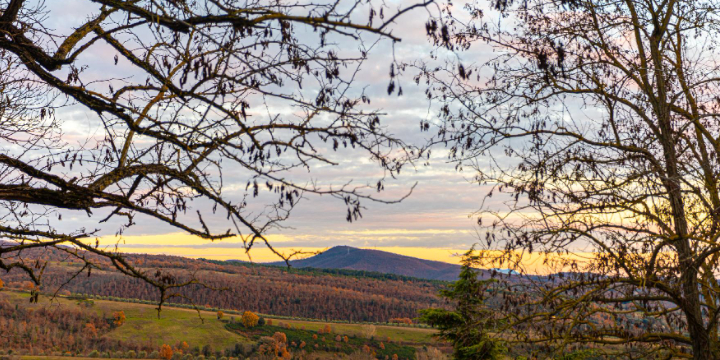
The Monte Peglia UNESCO MAB Biosphere Reserve is Umbria’s UNESCO Biosphere Reserve, situated in the heart of Italy and, therefore, serving as a bridge towards the Mediterranean and Africa. It is a territory of remarkable biodiversity and is, in part, characterised by the remains of an ancient extinct volcano.
The Reserve was established through the initiative of civil society, professional communities, and the research sector, following independent and participatory models. These models are gaining increasingly broad recognition and are also reflected, most recently, in the Hangzhou Strategic Action Plan, in response to the growing need to strengthen an international network centred on the strategic nodes represented by UNESCO World Biosphere Reserves. There is a clear and growing need for these territories to operate according to impartial, long-term, and evidence-based models, independent of short-term political contingencies, in accordance with the principles set out in the Advisory Opinion on States’ obligations in respect of climate change of 23 July 2025 and the relevant case law of the European Court of Human Rights. A profound renewal is indeed needed, as climate crises and emergencies transcend national borders.
What are currently the main priorities and challenges for the Monte Peglia Biosphere Reserve, and how is the Reserve addressing them?
The Reserve has carried out scientific research on predictive models of climate change, for instance through the “Peglia Protocol” project, developed in cooperation with the Department of Biology of the University of Florence, which led to the monitoring of 93 lepidopteran species within the area, several of which are listed under the Habitats Directive.
Most recently, a project aimed at enhancing the resilience of populations in the face of climate crises and emergencies, and at strengthening inter-institutional cooperation, received the prestigious UNESCO IDSSD patronage, ranking 20th out of 51 initiatives worldwide and being the only Italian project selected in this session. This was a source of great pride for all of us. The project is entitled “PEACE” and is being implemented together with the University of L’Aquila. We pay close attention to the interconnections between climate and human rights, climate and human health, and to the integrity of information. Issues such as climate-induced migration are central to us, not only for their humanitarian aspects, but also for the resilience of institutions and the rule of law, as well as for conflict prevention and peacebuilding processes. This is Objective B of the Hangzhou Strategic Action Plan.
How does the Reserve engage with local communities, institutions and other stakeholders to translate the UNESCO designation into concrete actions and benefits for the territory?
An independent model, initiated by civil society and developed without public funding, has brought international visibility to relatively lesser-known areas, progressively contributing to their recognition, enhancement and international promotion. The recognition of the Monte Peglia UNESCO MAB Biosphere Reserve as a bridge for national and international cohesion carries significant symbolic and practical value. It has the potential to contribute to the revitalisation and repopulation of these areas, while fostering their development as points of intersection on a global scale. Our objective is that, progressively, the whole of Umbria and the surrounding areas may initiate processes aimed at achieving the prestigious UNESCO MAB designation. We believe that this would provide the most up-to-date and meaningful expression of the longstanding vision of “Umbria, the Green Heart of Italy and Europe.”
From your experience, what do you see as the main contribution that Biosphere Reserves can make to building more resilient territories and addressing the challenges faced by Mediterranean regions?
First and foremost, their very role as bridges for relations and as international crossroads can help develop synergies and relationships. The Monte Peglia UNESCO MAB Biosphere Reserve represents a connecting bridge between Northern Europe, the Mediterranean and Africa. On 4 September 2025, we signed a cooperation agreement with the Nedre Dalälven UNESCO MAB Biosphere Reserve in Sweden, and in 2026 with Mount Etna, a UNESCO World Heritage Site.
We also have highly significant cooperation agreements, for example, with the Fondazione Aquileia, the Italian Julian Alps UNESCO MAB Biosphere Reserve—a transboundary Italian-Slovenian Biosphere Reserve—and the Monviso UNESCO MAB Biosphere Reserve, a transboundary Italian-French Biosphere Reserve.
Photo credits: Monte Peglia Biosphere Reserve
We look forward to learning more from Monte Peglia’s experience, connecting with its partners and building new opportunities for knowledge exchange and collaboration across the network.
28 September 2026
· At the III Spanish Congress of Biosphere Reserves, the La Siberia–La Palma Strategic Action Plan 2026–2035 for the Spanish Network was approved.
· UNESCOMED participates in the congress showing how Mediterranean cooperation boosts resilience.
· La Siberia, host of the congress, shows how the designation as a Biosphere Reserve is an opportunity for the territory.
18 September 2026
From 14 to 18 September 2026, EuroMAB 2026 brought together members of the UNESCO Man and the Biosphere (MAB) community in the Mount Arrowsmith Biosphere Region, Canada, to exchange knowledge, share experiences and explore new ways of working together for people and nature.
7 July 2026