From 14 to 18 September 2026, EuroMAB 2026 brought together members of the UNESCO Man and the Biosphere (MAB) community in the Mount Arrowsmith Biosphere Region, Canada, to exchange knowledge, share experiences and explore new ways of working together for people and nature.
EuroMAB is a key gathering for Biosphere Reserves across Europe and North America, bringing together Biosphere Reserve managers and practitioners, researchers, governments, communities and other partners. This year's meeting, held under the theme “Interwoven Futures: Co-creating sustainability with nature and communities”, focused on the importance of bringing together different forms of knowledge and perspectives to address shared challenges.
The conference opened with a reflection from Antonio Abreu, Secretary of the UNESCO MAB Programme, on a central question: Why does the MAB Programme matter more than ever? In his intervention, Abreu highlighted the scale and potential of the World Network of Biosphere Reserves, which now comprises 797 Biosphere Reserves in 145 countries. He emphasised that, in a context of accelerating biodiversity and climate challenges, the key challenge is no longer a lack of global commitments, but implementation: translating international ambitions into practical action in territories and with communities.
The Hangzhou Strategic Action Plan 2026–2035 provides a framework for this next decade, with an emphasis on scaling up what works, strengthening the contribution of Biosphere Reserves to biodiversity and climate action, reinforcing science–policy interfaces and investing in people and different knowledge systems.
A central message of the opening was the need to strengthen integration: between biodiversity and development, science and other knowledge systems, global commitments and territorial action, and Biosphere Reserves and public policies.
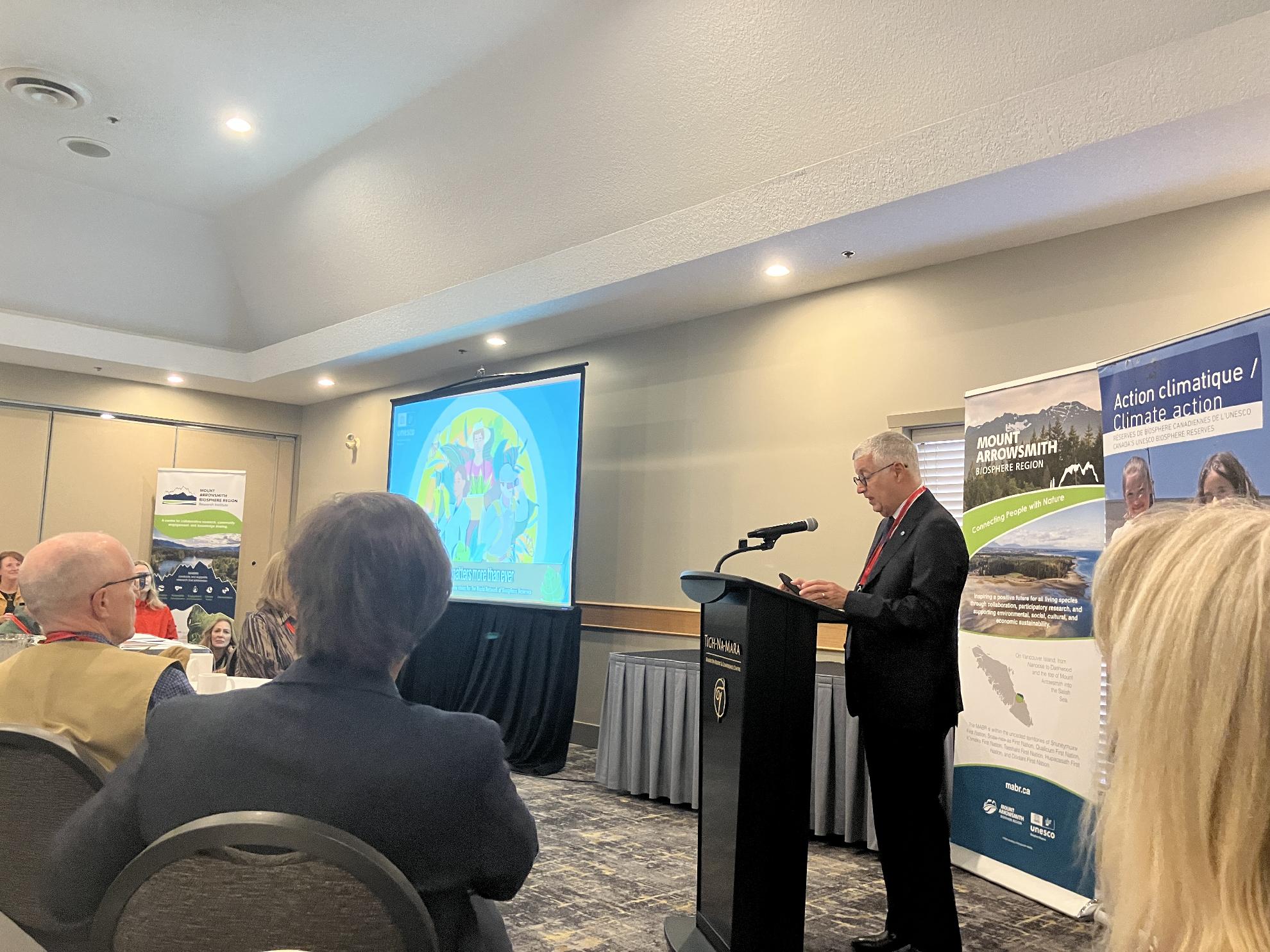
As part of EuroMAB 2026, UNESCOMED organised the session “Beyond Networking: Assessing the Impact of UNESCO Thematic Networks”, facilitated by Alba Bonàs Piella, MedMAB Coordinator, with the participation of Antonio Abreu (MAB secretariat), Heike Molitor (Eberswalde University), Jon Putnam (US Biosphere network) and Sara Biancci (Po Delta BR).
The session explored how networks can move beyond simply connecting people and organisations and become platforms for collective learning, research, capacity building and action. The discussion highlighted the importance of strengthening research and knowledge exchange, mobilising expertise across territories and supporting peer-to-peer learning and the transfer of knowledge and solutions. Networks can create added value by enabling Biosphere Reserves to collaborate on shared challenges and collectively contribute to wider agendas.
Other MAB committees and Biosphere Reserves belonging to the MedMAB network, such as the Apenino Tosco Emiliano BR and the Po Delta BR, also actively participated in the conference programme, bringing their experiences and perspectives to the wider EuroMAB community.

Beyond the dedicated session on thematic networks, EuroMAB 2026 offered a wide programme of spaces for exchange and collaboration. Participants explored topics including environmental education, transboundary Biosphere Reserves, youth engagement, community involvement, Indigenous and local knowledge, transdisciplinary approaches, community networks and Biosphere Reserve economies.
The programme also included field excursions, cultural activities and opportunities for informal networking, allowing participants to connect their discussions with the experiences and realities of the Mount Arrowsmith Biosphere Region and its communities.
Together, these exchanges reflected the diversity of approaches within the MAB Programme while reinforcing a shared understanding: the strength of the World Network lies not only in its scale, but in its capacity to connect knowledge, people and territories and to enable collective action.
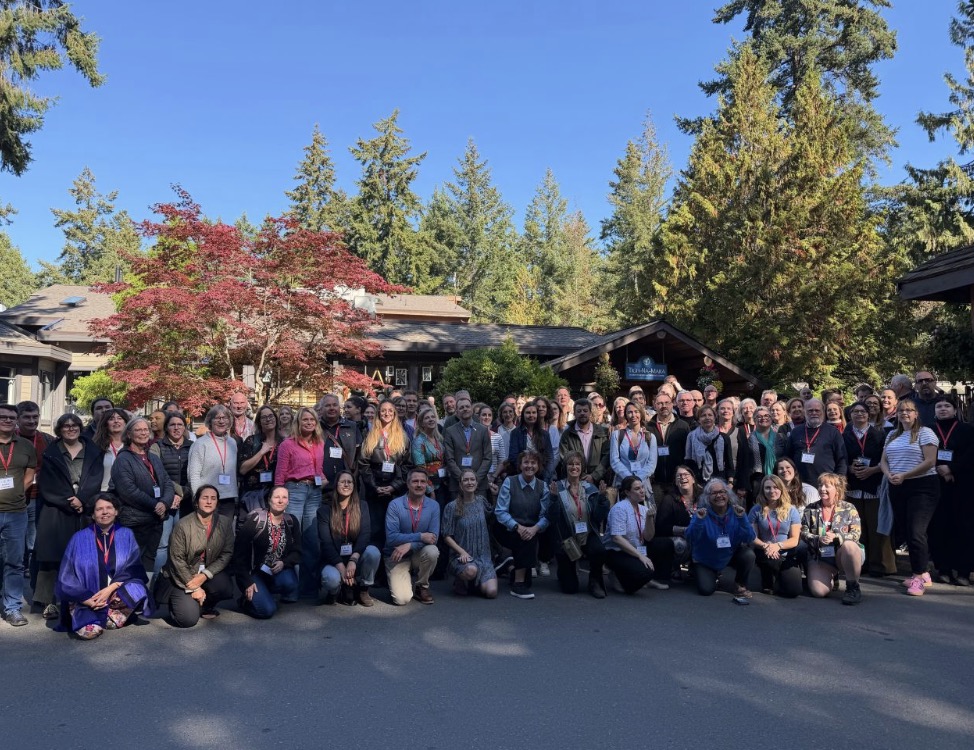
UNESCOMED's participation in EuroMAB 2026 contributes to its ongoing work to strengthen cooperation among Mediterranean Biosphere Reserves through MedMAB, creating opportunities to exchange knowledge, build capacities and develop collaboration around shared challenges across the two shores of the Mediterranean.
With the support of the Abertis Foundation, UNESCOMED will continue working to connect Biosphere Reserves, research and knowledge, fostering collaboration and helping transform shared learning into action for more resilient Mediterranean territories.
30 September 2026
Italy’s Monte Peglia UNESCO MAB Biosphere Reserve joins the MedMAB network, bringing the network to 73 Biosphere Reserves.
28 September 2026
· At the III Spanish Congress of Biosphere Reserves, the La Siberia–La Palma Strategic Action Plan 2026–2035 for the Spanish Network was approved.
· UNESCOMED participates in the congress showing how Mediterranean cooperation boosts resilience.
· La Siberia, host of the congress, shows how the designation as a Biosphere Reserve is an opportunity for the territory.
7 July 2026